
If I want to lower bruising, swelling, and last-minute problems before fillers, I need to check my health, review what I take, pause harsh skincare, and book with enough time before any big event.
Most swelling and bruising settle within 1 to 2 weeks, but timing still matters. I’d leave at least 2 weeks around dental work, about 1 week before work or social plans, and 4 to 6 weeks before a wedding or other big event. I’d also tell my practitioner about any cold sores, recent illness, skin problems, past fillers, allergies, medicines, and travel plans before treatment day.
Before I go ahead, I’d run through this short checklist:
- Delay treatment if I’m pregnant, breastfeeding, unwell, recently vaccinated, or have a skin or dental infection
- Speak up about cold sores, because needle treatment can trigger a flare-up
- Leave 2 weeks before and after dental treatment
- Check medicines and supplements that may make bruising more likely
- Pause strong skincare like retinoids, AHAs, BHAs, and strong vitamin C for about 7 days
- Avoid alcohol and hard exercise on the day
- Arrive with a clean face, well-hydrated, and after a normal meal
- Plan around recovery, not just the appointment slot
I’d use this as a simple pre-filler check so I turn up ready, with fewer avoidable issues after treatment.
DERMAL FILLERS: Dos and Don’ts to Look YOUR BEST

sbb-itb-4219cc3
Check suitability first: who should delay or avoid fillers
Start here: rule out anything that means you should delay treatment.
Before you book, look for any reason to wait. Pregnancy, breastfeeding, illness, infection, and recent procedures can all affect safety and results.
Medical and skin conditions that may mean postponing treatment
Pregnancy, breastfeeding, illness, infection, and recent procedures can all mean filler treatment should wait. Recent illness or vaccination may increase swelling risk.
Active acne flare-ups, skin infections, and dental infections are also reasons to hold off. They can increase the risk of infection and other problems. If you’ve had any previous permanent filler, such as silicone oil or methacrylates, tell your practitioner. These materials can migrate or lead to chronic inflammation.
Why cold sores, dental work and recent facial treatments matter
If you’ve ever had a cold sore, tell your practitioner before booking. Needle trauma can trigger a flare-up, so antiviral medication may need to be considered in advance.
Recent dental work matters too. Dental procedures – even a routine hygienist appointment – can temporarily increase infection risk around the filler area. Leave at least two weeks between dental treatment and fillers, both before and after.
Chemical peels, microneedling, and laser treatment can leave the skin too sensitive for fillers. Wait until the skin has fully healed before going ahead.
| Pre-Treatment Concern | Why It Matters | What to do |
|---|---|---|
| Cold sores | Needle trauma can trigger a cold sore flare-up | Tell your practitioner in advance; antiviral planning may be needed |
| Dental work | Risk of infection around the filler area | Leave at least 2 weeks before and after fillers |
| Peels, microneedling, laser | Skin may be too sensitive for fillers | Wait until the skin has fully healed |
| Recent illness or vaccination | May increase swelling risk | Delay until fully recovered |
| Active skin or dental infection | Higher risk of infection and complications | Delay until the infection has completely resolved |
If none of these apply, the next step is to check your medicines, supplements, and skincare.
Pre-filler health checklist: medications, supplements and skincare
If treatment is suitable, the next step is to check your medicines, supplements and skincare.
Medications and supplements to discuss before treatment
Some medicines and supplements can increase bruising after fillers. Tell your practitioner about everything you take at your consultation, including over-the-counter pain relief and herbal products.
Never stop a prescription medicine without medical advice. Medicines such as warfarin and clopidogrel should not be paused unless a clinician has clearly said it is safe.
Products to discuss with your practitioner include:
- Aspirin – discuss with your GP before pausing; may increase bruising
- Ibuprofen / Naproxen – avoid for 2–3 days if medically appropriate
- Warfarin / Clopidogrel – do not pause without specialist approval
- Fish oil / Omega-3, Vitamin E, Ginkgo Biloba, Garlic supplements – pause around 7 days before if appropriate
- St John’s Wort – pause around 7 days before if appropriate
Skincare and skin treatments to pause before fillers
Medicines aren’t the only thing to check. Some skincare can leave the skin more reactive than usual.
Pause retinoids, AHAs, BHAs and strong vitamin C in the week before treatment. It’s also best to avoid waxing, bleaching and depilatory creams on the area being treated.
Alcohol, smoking, hydration and what to do on the day
A few simple steps on the day can make things easier.
Avoid alcohol and strenuous exercise on the day of treatment, as both can increase blood flow and make swelling and bruising worse. If you smoke, try to cut down or avoid it before your appointment, because smoking can affect skin quality, healing and long-term results.
On the day itself, eat and drink as normal, and stay hydrated. Turn up with a clean face, having had a normal meal, and avoid alcohol that day.
Plan the timing: appointments, events, travel and recovery
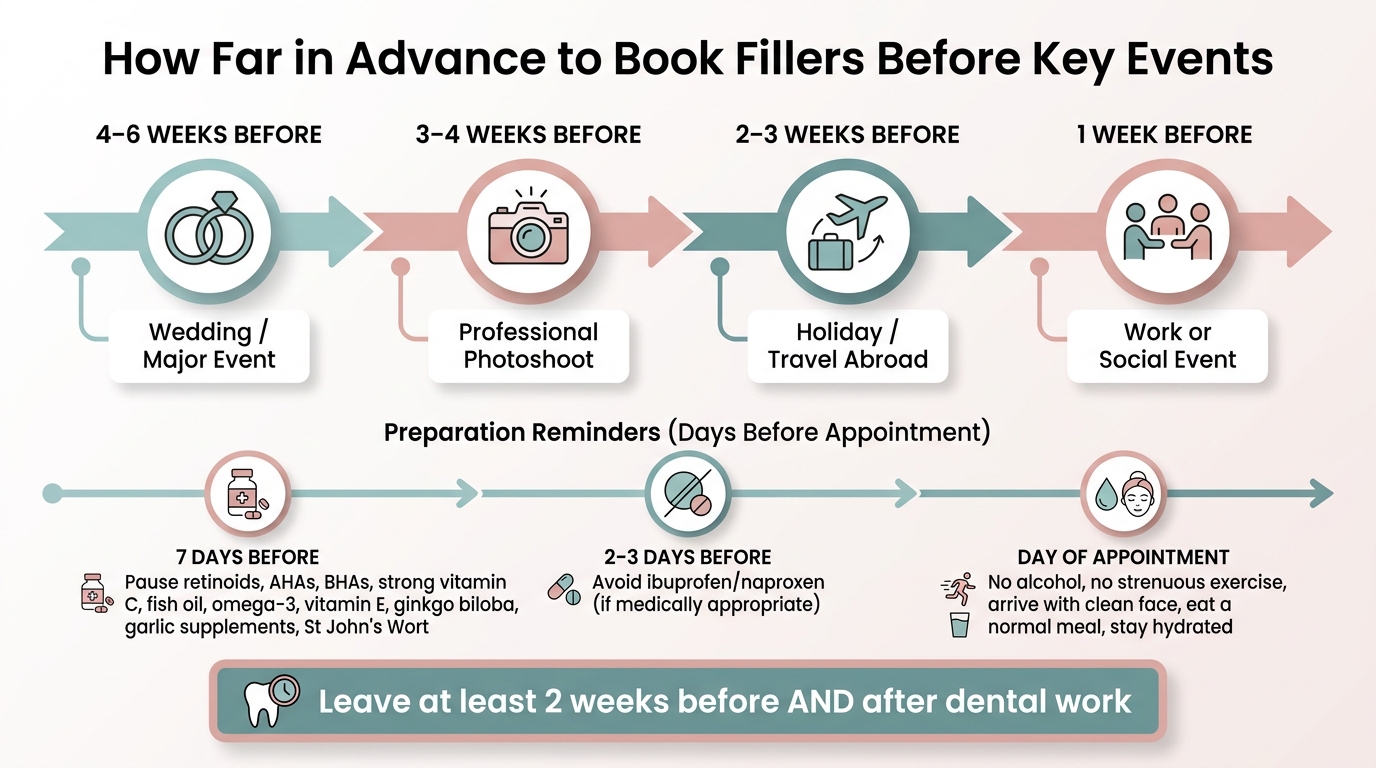
Pre-Filler Timing Guide: How Far in Advance to Book
Once your health checks are clear, plan your appointment around recovery, not just what fits in your diary. If you book too close to a big date, you could still have swelling or bruising while things are settling.
How far ahead to book fillers before weddings, holidays and big events
A simple rule works well here: leave at least four weeks before anything important, like a wedding or photoshoot. That gives your skin time to settle and also leaves space for a review appointment if needed.
| Event Type | Minimum Recommended Gap |
|---|---|
| Wedding / Major event | 4–6 weeks |
| Professional Photoshoot | 3–4 weeks |
| Holiday / Travel Abroad | 2–3 weeks |
| Work or Social Event | 1 week |
If you’re going away, try to leave 2–3 weeks before travel so any swelling has time to calm down first.
Exercise, heat, travel and work planning around your appointment
It also helps to think about what happens right after the appointment. Intense heat, including saunas and hot baths, can make swelling and bruising worse. So can trying to cram treatment into a packed week.
If you’re travelling in from Bristol, Bath, Cardiff, Swindon, Newport or Gloucester, leave a buffer day on either side of your appointment. That bit of extra space can make work, travel, and recovery much easier to manage.
Bring your event dates, travel plans and work commitments to your consultation so the timing can be planned around your schedule.
Consultation checklist: what to tell Eterna Face before fillers

What to share and what to ask at your consultation
Your consultation is the last check before treatment. Be open about everything so your plan is safe and exact.
| What to Tell Your Practitioner | Why It Matters |
|---|---|
| Previous fillers or facial surgery | Permanent fillers or facial surgery can affect future treatment |
| Allergies to lidocaine, hyaluronic acid or collagen | Helps your practitioner choose the right product and safe numbing agents |
| Cold sore history | May mean preventative medication is needed |
| Current antibiotics or recent illness | May mean treatment should be delayed |
| Recent IPL, plasma sublimation or laser resurfacing | May mean you need more time to heal first |
| Pregnancy or nursing | Typically a contraindication for elective treatment |
| Upcoming events or travel | Helps plan around bruising or swelling |
Once your practitioner has your medical details, use the consultation to pin down the treatment plan. Ask which filler will be used, why it suits your face, how complications are handled, and what aftercare you’ll need.
How AI facial analysis supports personalised treatment planning
That conversation gets even sharper when facial analysis is part of the process. At Eterna Face, consultations can include AI-powered facial analysis to map facial proportions, symmetry and skin quality. This gives your practitioner a clearer view before treatment.
For clients in Bristol, Bath and Cardiff, that means a plan that’s specific and measurable, rather than based on guesswork alone.
Use that information to finalise the plan and timing before your appointment.
Key points to remember before your filler appointment
Bring your medication list, allergy details and treatment dates. Also mention any events, travel or exercise plans before you book.
FAQs
Can I have fillers if I’m prone to bruising?
Yes, you can often still have dermal filler if you’re prone to bruising. Bruising is a common, usually mild, short-lived side effect of HA fillers.
That said, whether filler is right for you depends on your health and anything that may increase bleeding risk. Tell your practitioner if you tend to bruise easily, and mention any blood-thinning medicines or supplements during your consultation and medical history review.
What should I do if I feel unwell before my appointment?
If you feel unwell before your appointment, contact your clinic straight away rather than turning up. Whether it’s a cold, an infection, or something else, your practitioner needs to decide if it’s safe to go ahead.
Feeling unwell can affect how your immune system responds and may increase the risk of complications. Putting your health first gives you the best chance to reschedule your appointment for a time when you’ve fully recovered.
How soon can I travel after fillers?
Discuss your travel plans with your practitioner during your consultation. Their advice should match your treatment and your recovery needs.
There may not be a fixed waiting period after treatment. But you should be ready for possible swelling or bruising.
In most cases, it’s best to leave some time for any immediate visible reactions to calm down before you travel. It also helps to check with your clinic that your plans line up with your aftercare.