
If I’m planning treatment, I’d use a clinic assessment. If I just want a fast check of visible skin issues, I’d start with an online scan.
A skin type test can help with oiliness, dryness, redness, hydration, pores, fine lines, and pigmentation. But it does not diagnose medical problems like rosacea, eczema, or skin cancer. That matters, because a wrong read can lead to the wrong skincare or a treatment your skin is not ready for.
Here’s the short version:
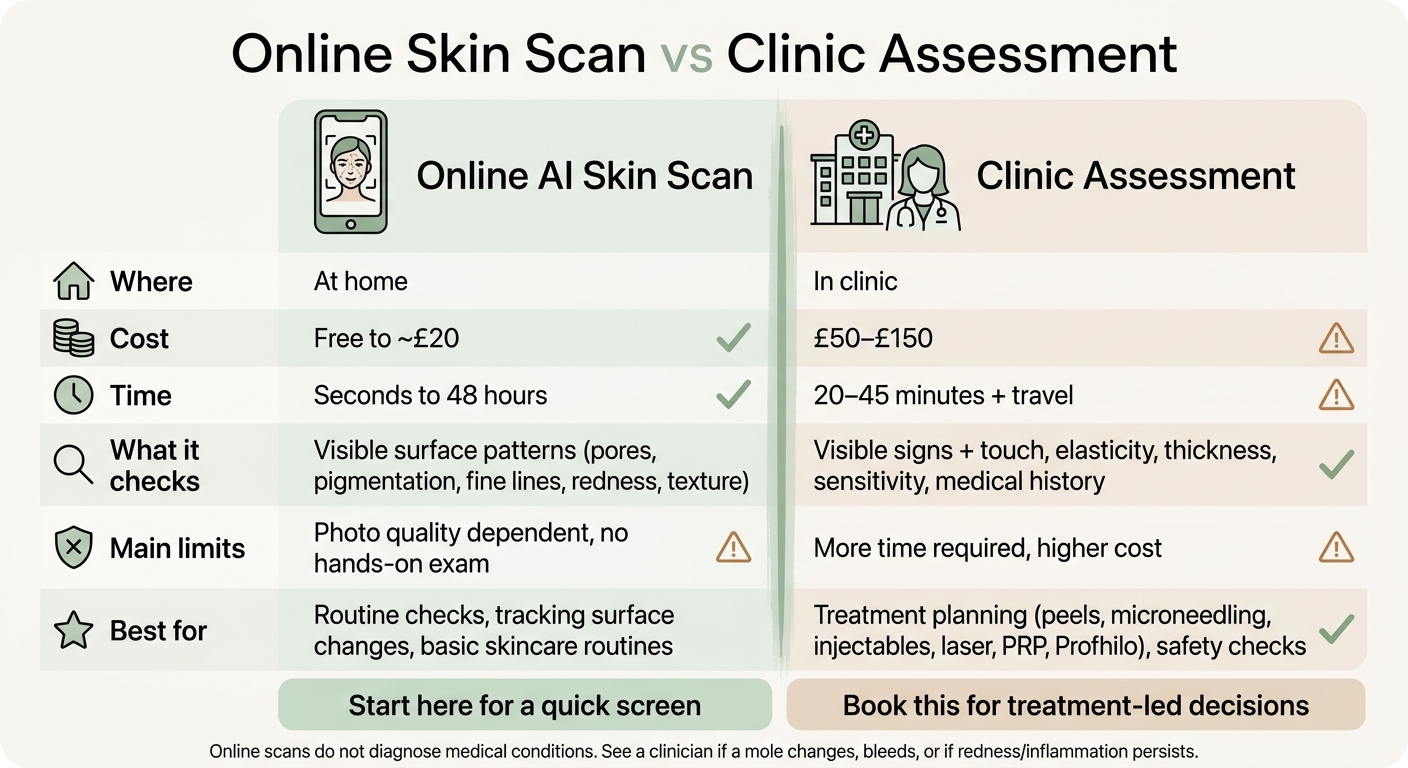
- Online scan: home-based, photo-led, often free to about £20, and done in seconds to 48 hours
- Clinic assessment: in-person, touch-based, usually 20–45 minutes plus travel, and often £50–£150
- Online tools can only assess what shows in a photo
- Clinic reviews include skin feel, thickness, elasticity, sensitivity, and your medical background
- For peels, microneedling, injectables, laser, PRP, skin boosters, and Profhilo, an in-person check is the safer option
- If a mole is changing, bleeding, or irregular, or if redness and inflammation do not settle, book a face-to-face review
A photo-based scan is useful for surface-level tracking. A clinic visit is better when the result will shape a treatment plan.
Online Skin Scan vs Clinic Assessment: Which Is Right for You?
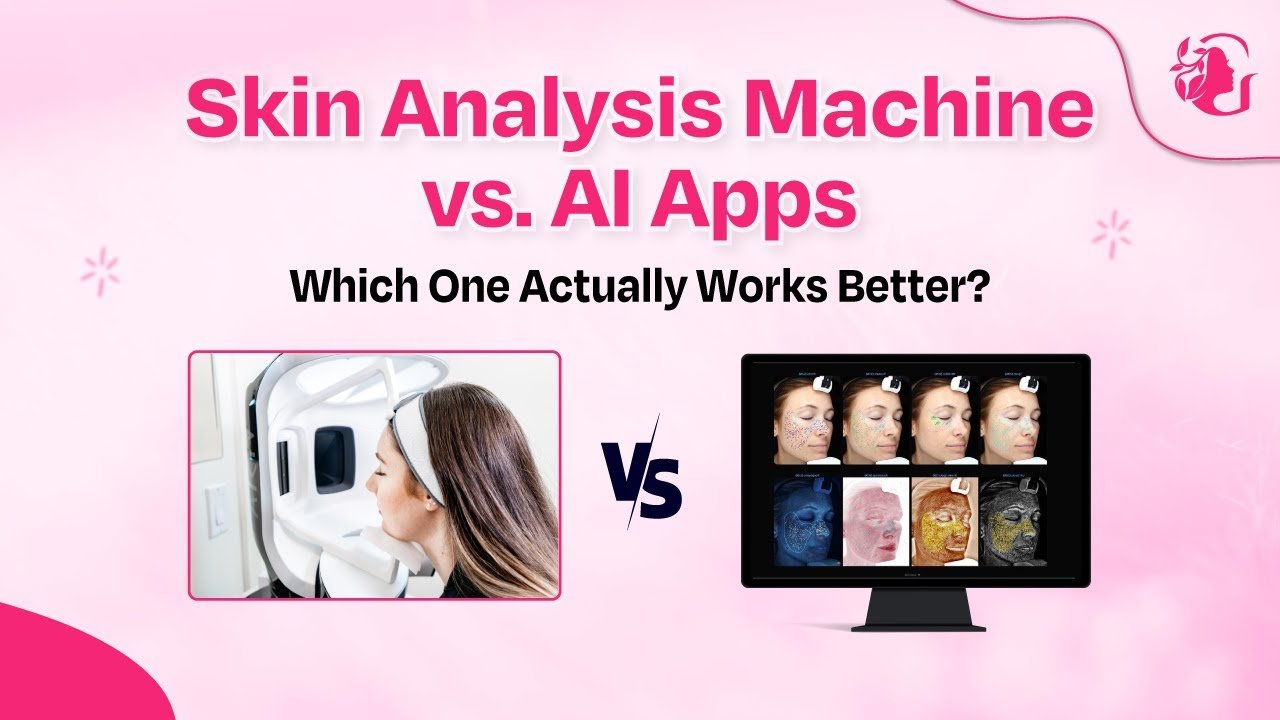
AI Skin Apps vs Skin Analysis Machines – Which One Actually Works Better in 2025?
sbb-itb-4219cc3
Quick Comparison
| Check | Online scan | Clinic assessment |
|---|---|---|
| Where I do it | At home | In clinic |
| Cost | Free to ~£20 | £50–£150 |
| Time | Seconds to 48 hours | 20–45 minutes plus travel |
| What it checks | Visible skin patterns | Visible signs plus touch and history |
| Main limits | Photo quality, no hands-on exam | More time and higher cost |
| Best for | Routine checks, tracking changes | Treatment planning and safety checks |
In short, I’d use online for a first screen and clinic for treatment-led decisions.
Clinic skin type testing: what it covers and why it goes further
What happens during an in-person skin assessment
A clinic assessment usually starts with a consultation. The practitioner will ask about your medications, diet, stress levels and treatment goals. That background matters, because what shows up on the surface doesn’t always explain what’s going on underneath.
Then the hands-on part begins. The practitioner looks at your skin up close and checks things like texture, elasticity, congestion and sensitivity. They can also touch the skin to assess bounce-back and thickness. That hands-on feedback is a big part of the process, and it’s something no camera-based tool can replicate.
Where clinic testing has the edge
The big strength of clinic testing is that it connects what the practitioner sees and feels with the treatment you’re thinking about. If you’re looking at chemical peels, microneedling or injectables, they can assess whether your skin is ready for that kind of treatment. That check can make a big difference before anything more intensive goes ahead.
Eternaface uses face-to-face consultations to build a plan around your current skin condition. An online scan can give a snapshot, but it can’t match that level of detail.
Drawbacks of clinic testing
The main trade-off is time and cost. The downsides are mostly practical. Getting to a clinic takes time, especially if you need to travel, and appointments usually need to be booked ahead. A standalone advanced skin assessment can cost around £60 to £75, although some clinics credit that fee towards treatment.
Online AI skin scans: fast, image-based and done from home
How AI skin scans work and what they look at
Online scans swap hands-on detail for speed and ease. You upload a clear, front-facing photo, then answer a short questionnaire. The system compares your image with known skin patterns to pick up visible signs on the surface of the skin.
In a matter of seconds, the scan may flag things like enlarged pores, redness, uneven pigmentation, fine lines and surface texture irregularities. That kind of instant feedback can be useful when you’re deciding whether it’s worth booking an appointment.
But there’s a catch: the scan is only as good as the photo you give it.
How image quality affects your results
The accuracy of an online scan depends heavily on image quality. Poor lighting, shadows or blur can skew the result. For more reliable feedback, take your photo in natural daylight, with no makeup, no glasses, and your hair pulled away from your face.
If you plan to do repeat scans, keep things consistent. Use the same angle, the same lighting and the same time of day. That way, you’re more likely to spot actual skin changes rather than differences caused by the photo itself.
What online scans cannot do
An image-based scan can only assess what shows up in a photo. It can’t feel your skin, judge elasticity or thickness, or spot deeper congestion that isn’t visible on the surface. It also can’t review your full medical history or day-to-day factors, or say whether a skin change may be linked to hormones or medication.
"While AI is fast and sophisticated, it is not a replacement for a consultant dermatologist or a clinical diagnosis. Its true value lies in acting as a smart skincare support tool rather than a definitive medical verdict." – REFORM Skincare UK
So yes, online scans can point out visible concerns. What they can’t do is replace clinical judgement before peels, microneedling, injectables or laser work. And if a spot is changing, bleeding or irregular, don’t rely on a scan alone – book an in-person assessment.
Those limits matter most when you’re weighing up a quick at-home scan against a face-to-face review.
Clinic vs online scan: a direct comparison
The trade-off is pretty clear: speed and ease on one side, hands-on detail on the other.
| Feature | Online AI Skin Scan | Clinic Skin Assessment |
|---|---|---|
| Convenience | Available 24/7 from home | Requires travel and a booked appointment |
| Depth of review | Surface-level patterns | Hands-on examination and medical history |
| Image quality needs | Depends on the user’s photo quality | Controlled clinical lighting |
| Speed | Instant to 48 hours | 20–45 minutes, plus travel time |
| Likely cost | Free to ~£20 | £50–£150, often redeemable against treatment |
| Treatment planning value | Best for topical skincare routines | Essential before injectables, peels, microneedling and laser treatments |
| Safety limits | Pattern recognition only | Clinical safety checks and physical examination |
Which option fits better into daily life
An online scan fits more easily into a busy day. You can do it from home, at any hour, without fitting in travel or waiting for an appointment. If you just want a quick read on visible skin issues, that makes it a practical option.
A clinic visit asks more of you. You need to book ahead, travel there, and set time aside. For a simple check-in, that can feel like a faff. But when treatment is on the table, the extra effort tends to make more sense.
Which option gives more reliable guidance before treatment
For anything beyond basic skincare, a clinic assessment is the more reliable choice. Before injectables, peels, microneedling or laser treatments, a clinician needs to assess your skin in person. That matters when the plan depends on skin thickness, barrier health or sensitivity.
An AI scan can point out surface concerns, but it can’t touch the skin, check density, or judge if a stronger peel or an energy-based treatment is suitable. That’s where trained clinical judgement comes in, along with a physical examination.
When to start online and when to book in person
Using both, one after the other, often makes the most sense. Start with an online scan for a quick overview of visible concerns, or to keep an eye on whether a new routine is changing how your skin looks over time.
Book in person when the issue is persistent, changing or linked to treatment. That includes persistent acne, rosacea, changing moles or severe inflammation. If you’re thinking about an aesthetic treatment, an in-person consultation is the right next step.
Eternaface offers AI-powered facial analysis across Bristol, Bath, Cardiff, Swindon, Newport and Gloucester, with face-to-face review when a physical assessment is needed. In plain terms, it comes down to this: use online for a quick screen, and clinic for treatment-led decisions.
Conclusion: choosing the right option for your skin goals
The choice comes down to one simple thing: how much detail you need before you do anything.
An online AI skin scan is handy for quick checks. It can help you track surface-level changes, build a basic routine, or see how your skin reacts to a new product. That makes it useful for day-to-day monitoring, but not for treatment decisions.
A clinic assessment gives you hands-on review and medical context that no image-based tool can match. If you’re thinking about peels, microneedling or injectables, that’s the safer route. And if a mole changes, a rash spreads, or inflammation doesn’t settle, book a face-to-face assessment.
Use online scans for quick screening. Use a clinic assessment when the result will shape treatment.
Eternaface offers AI-powered facial analysis and in-person consultations across Bristol, Bath, Cardiff, Swindon, Newport and Gloucester.
FAQs
How accurate is an online skin scan?
Online skin scans are useful for tracking visible surface-level changes like hydration, texture, and early signs of ageing. That matters because they give you a steady, objective baseline instead of relying on guesswork in the mirror.
That said, they don’t replace a clinical diagnosis. AI can’t feel skin density, spot congestion under the surface, or factor in your full medical history. So it works best as a support tool, not the final word.
When should I book a clinic skin assessment?
Book an in-person clinic assessment for complex, changing or potentially serious skin concerns that need a physical examination. AI facial analysis can help with a starting point and routine tracking, but it can’t replace a practitioner looking at your skin in person.
Prioritise a face-to-face consultation in Bristol, Bath, Cardiff or nearby if you notice suspicious changes in a mole, painful or blistering rashes, or if things still feel unclear after a digital scan. It’s also best to do this before treatments such as chemical peels or microneedling.
Can a skin scan detect medical skin problems?
No. An AI skin scan cannot give you a medical diagnosis.
It can look at surface-level features like hydration, texture, and redness. But that’s where the line is. It can’t do a clinical assessment, feel skin density, check what’s happening under the skin, or factor in your full medical history.
If you’re worried about suspicious moles, quickly changing lesions, persistent acne, or inflammatory skin conditions like eczema, book an in-person appointment with a GP or dermatologist.
AI can help with skin tracking. It should not take the place of medical care.