
If I had to put it simply: microneedling is often the better fit for acne scars and uneven texture, while PRP is often the better fit for dull skin, early ageing, and skin that gets irritated easily. Both usually need 3 to 4 sessions, both can leave redness for 24 to 72 hours, and both may work best together when you want help with both texture and skin quality.
If you’re trying to choose, I’d focus on four things first:
- Your main skin concern
- How much downtime you can deal with
- How you feel about needles and a blood draw
- Whether you want one treatment or a combined plan
Here’s the short version:
- Microneedling uses tiny needles to push the skin into making more collagen
- PRP uses platelets from your own blood to support skin repair
- Microneedling is often picked for atrophic acne scars and rough texture
- PRP is often picked for dullness, mild lines, and early ageing
- Combined treatment is often used when you want help with both surface texture and overall glow
- Downtime is often 24–48 hours for microneedling and 24–72 hours for PRP
- PRP can cost around £380 to £1,150 per session
- Top-ups are often done every 6 to 12 months
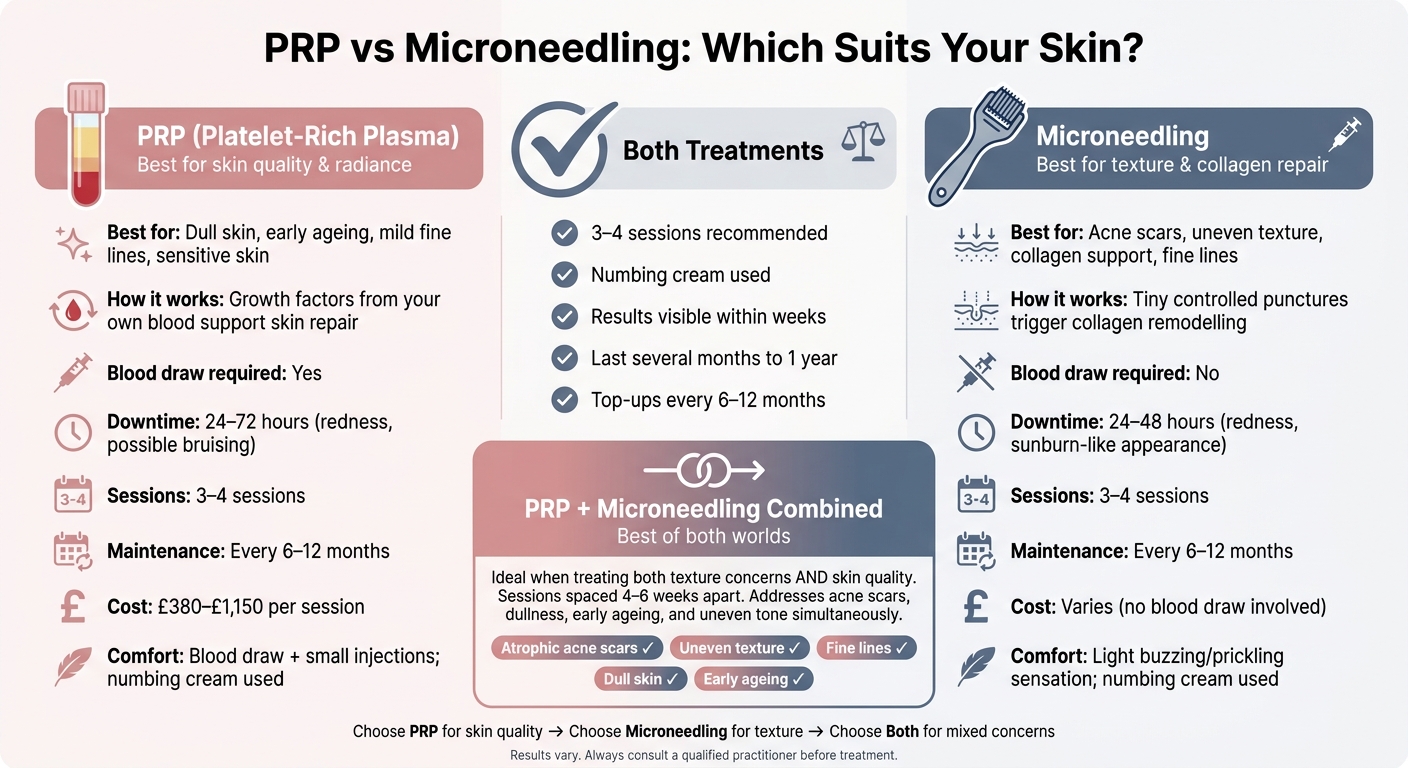
PRP vs Microneedling: Side-by-Side Comparison
Quick Comparison
| Treatment | Often best for | How it works | Downtime | Sessions | Things to think about |
|---|---|---|---|---|---|
| PRP | Dull skin, early ageing, mild lines, skin that reacts easily | Uses platelet-rich plasma from your own blood | 24–72 hours; mild swelling or bruising can happen | 3–4 | Includes a blood draw and small injections or topical use |
| Microneedling | Acne scars, uneven texture, collagen support | Uses tiny controlled punctures in the skin | 24–48 hours of redness | 3–4 | No blood draw, but skin can look sunburnt after treatment |
| PRP + Microneedling | Mixed concerns such as scars plus dullness | Collagen stimulation plus platelet-led repair support | Varies by plan | Often a course spaced 4–6 weeks apart | May suit people treating both texture and skin tone at once |
What I like about this comparison is that it gives a clear answer fast: pick microneedling for texture, PRP for skin quality, and combine them if you want both. From there, it’s mainly about your skin, your budget, and your schedule.
sbb-itb-4219cc3
How PRP and Microneedling Work
PRP and microneedling both help the skin repair itself, but they go about it in different ways. That difference matters. It shapes what happens during the appointment, how the treatment feels, and which option may fit your skin goals better.
PRP: from blood draw to skin repair
PRP uses your own platelets to help support repair. The process starts with a small blood draw, much like a standard blood test. Your blood is then spun in a centrifuge to separate the platelet-rich plasma. After that, the PRP is applied or injected into the treatment area, most often the face or neck. PRP delivers growth factors that support repair.
After treatment, you may notice redness, mild swelling, or bruising. A topical numbing cream is usually applied first to help keep discomfort manageable. So yes, PRP is a bit more involved on the day, but it’s also more targeted.
Microneedling: collagen stimulation through controlled needling
Microneedling uses a medical device to make tiny, controlled punctures in the skin. This kicks off the skin’s repair response and supports collagen remodelling over time, which can help improve texture. It can also help active ingredients sink in more deeply. The feeling during treatment is often described as a light buzzing sensation.
For people who are mainly looking at texture and collagen support, microneedling is often the simpler route.
Here’s the quickest side-by-side view.
| Feature | PRP | Microneedling |
|---|---|---|
| How it works | Growth factors from your own blood | Tiny controlled punctures to trigger collagen remodelling |
| Blood draw required | Yes | No |
| Numbing cream used | Yes | Yes |
| During or after treatment | Redness, mild swelling, possible bruising | Light buzzing sensation during; redness after |
PRP vs Microneedling for Common Skin Concerns
Now that the basics are out of the way, it helps to match each treatment to the skin issue it tends to handle best.
Acne scars and uneven texture
For atrophic acne scars, microneedling is often the go-to option. It helps the skin build collagen in scarred areas, which can soften uneven texture over a series of sessions.
That said, PRP and microneedling often work better together. PRP contains growth factors that support deeper repair and may help the skin recover better between appointments. If scarring is more marked, using both treatments together – usually spaced around 4 to 6 weeks apart to fit the skin’s natural healing cycle – is often seen as the stronger route.
Fine lines, dull skin, and early ageing
PRP tends to do more for overall skin quality. Think better radiance, a fresher look, and softer fine lines. Microneedling works more on the structural side, helping kick-start collagen production so the skin feels firmer and mild lines soften over time.
Used together, they can help both the surface of the skin and what’s going on underneath.
Pigmentation, redness, and mixed skin concerns
Redness and pigmentation need a one-to-one assessment. Skin that reacts easily – including skin prone to redness or sensitivity – needs extra care before any needling treatment, because depth and device settings can change how the skin responds. PRP has a lower chance of adverse reactions because it uses your own blood, but neither option is a simple answer for pigmentation without a proper assessment first.
| Skin Concern | Usually better suited | Expected Improvement | Combined PRP + Microneedling? |
|---|---|---|---|
| Atrophic acne scars | Combined | High | Yes – PRP supports collagen repair |
| Uneven texture | Microneedling | High | Yes – PRP helps overall skin health |
| Fine lines | PRP | Moderate | Yes – stronger collagen-stimulating effect |
| Dull skin | PRP | High | Yes – more immediate radiance and refresh |
| Early ageing | Combined | Moderate to high | Yes – targets both texture and skin quality |
| Pigmentation and redness | Individual assessment | Moderate | Requires professional evaluation first |
Next, compare recovery, session count and cost before deciding.
Downtime, Sessions, Cost, and Skin Suitability
The best choice usually comes down to two things: your skin goal and your diary.
Recovery time and fitting treatment around work and social plans
Both treatments cause some redness straight after treatment, but the recovery period isn’t quite the same. Microneedling often leaves skin looking sunburn-like for 24 to 48 hours. PRP can stretch that to 24 to 72 hours, and some people may also get minor bruising from the blood draw or injections.
That small gap can make a big difference. If you’ve got work meetings, a flight to catch, or plans at the weekend, an extra day of redness may matter more than you think.
How many sessions most people need
Neither treatment usually does its best work in one appointment. For both PRP and microneedling, a standard course is often 3 to 4 sessions. Results tend to show within weeks and can last several months to a year.
To keep results going, most people book top-ups every 6 to 12 months.
PRP sessions can range from £380 to £1,150 per session.
Who each treatment tends to suit
These side-by-side differences can help narrow the choice.
| Feature | Microneedling | PRP |
|---|---|---|
| Downtime | 24–48 hours of redness | 24–72 hours; possible bruising |
| Sessions | 3–4 sessions | 3–4 sessions |
| Comfort level | Prickling sensation; topical numbing used | Blood draw plus small injections; mild pressure |
| Maintenance | Every 6–12 months | Every 6–12 months |
| Ideal candidate | Acne scars, uneven texture, fine lines | Dullness, early ageing, sensitive skin types |
In simple terms, PRP leans more towards skin quality and sensitivity, while microneedling leans more towards texture and collagen repair. PRP may suit you better if you want a more regenerative treatment with a low-allergy angle. Microneedling may make more sense if your main aim is a simpler treatment centred on collagen.
Next, match those differences to your main skin concern and comfort level.
Which Treatment Is Right for Your Skin?
Now that the differences in recovery time and treatment approach are clear, the choice mostly comes down to what you want to treat first.
If uneven texture or acne scarring is your main issue, microneedling is usually the more targeted choice. If your skin looks dull or you’re starting to notice early signs of ageing, PRP is often the better match.
When combining PRP and microneedling may give better results
If you’re dealing with both scarring and dullness, combining PRP with microneedling can work well. It lets you address texture and overall skin quality in the same plan.
A skin consultation can help you work out whether one treatment is enough or if a combined approach makes more sense.
Key points to consider before booking a consultation
Before you book, it helps to be clear on a few things:
- Your main skin concern
- How much downtime you can realistically manage
- How comfortable you are with needles and a blood draw
- Whether you’re ready for a course of treatments, not just a one-off appointment
A consultation in Bristol, Bath, Cardiff, Swindon, Newport or Gloucester can confirm the best option before you book.
FAQs
Is PRP or microneedling more painful?
The available information doesn’t directly compare how painful PRP and microneedling are. So, based on these sources, we can’t say that one hurts more than the other.
If you’re thinking about either treatment in Bristol, Bath or Cardiff, it’s best to speak with a qualified aesthetic professional. They can assess your skin, talk you through what to expect, and explain the comfort options available.
How soon will I see results?
Results vary based on your skin concern and the treatment your practitioner uses.
Some options, such as certain biorevitalisation peels, can give an immediate tightening effect with visible change after the first session. Others work deeper in the skin to support collagen production and skin remodelling, so clinical improvement may begin to show after 45 to 90 days.
Your practitioner can guide you on what to expect based on your skin type and goals.
Can I have PRP or microneedling if I have sensitive skin?
Yes, but it depends on how sensitive your skin is and how easily it reacts.
You can still get redness and discomfort. Some people may also notice reduced sensitivity or local hypersensitivity.
The safest route is to have a clinician check your skin first and start with a cautious, lower-intensity plan, especially if you’ve had hypersensitivity reactions before.