
Dull skin usually comes down to three things: low moisture, slower skin turnover, or uneven tone. In this guide, I’d sum it up like this: vitamin C is often used for brightness and collagen support, while B12 and biotin are more often linked with hydration, barrier support and smoother skin feel.
If you want the short version, here it is:
- Vitamin C may help skin look brighter and more even
- B12 is often used when skin looks flat or tired
- Biotin is more about dryness, texture and skin barrier support
- Mesotherapy injections are usually used for small, targeted areas
- IV vitamin therapy is more often chosen for general hydration and nutrient support
- Results are gradual, and some people notice changes in tone, texture and plumpness after a few sessions
- Minor pinpoint marks can last 1–2 days after some injection methods
- A proper assessment matters, because dull skin does not have one single cause
Skin can look dull for simple day-to-day reasons too. Cold weather, indoor heating, poor sleep, stress and dehydration can all play a part. In many cases, the skin may look rough, dry or washed out before anything else. Studies and clinical sources in the article link dullness with oxidative stress, moisture loss, slower renewal and nutrient shortfalls.
If I were comparing the treatment routes at a glance, it would look like this:
| Option | Main use | Best for | What to expect |
|---|---|---|---|
| Vitamin C mesotherapy | Targeted skin support | Localised dullness, uneven tone, fine lines | Small injections under the skin; marks may show for 1–2 days |
| B12 or biotin injections | Targeted nutrient support | Dry, tired-looking or rough-textured skin | Local treatment focused on skin feel and moisture |
| IV vitamin therapy | Whole-body hydration and nutrient delivery | General dullness linked with fatigue or dehydration | Drip session, often around 30–60 minutes |
The main point is simple: if your skin looks dull, the right option depends on why it looks dull in the first place.
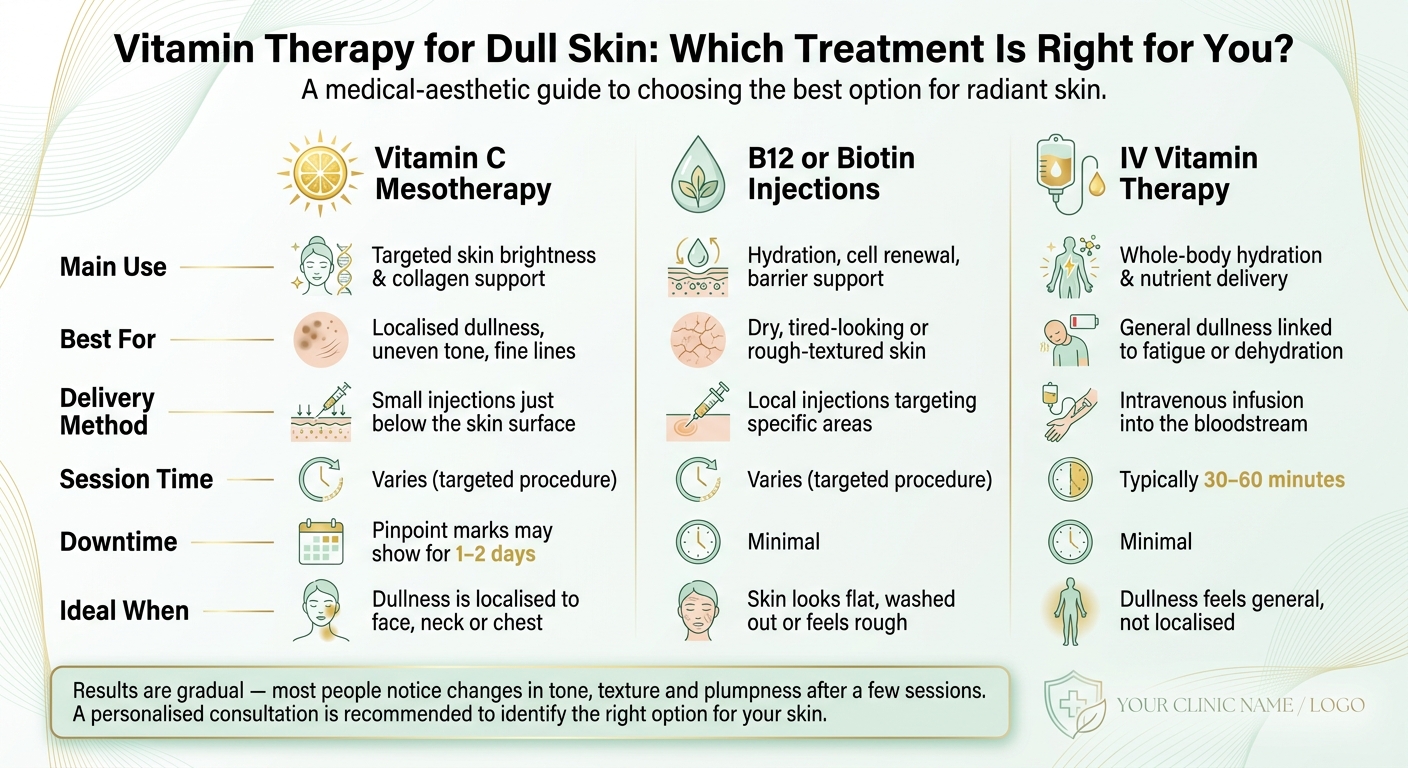
Vitamin Therapy for Dull Skin: Which Treatment Is Right for You?
Vitamin C for brightness, glow and collagen support
Vitamin C is an antioxidant that helps protect the skin from oxidative stress and day-to-day outside damage, both of which can leave it looking flat or uneven. It also supports collagen production, which plays a part in how firm and dense skin feels over time. On top of that, it can help soften the look of dark patches that make the complexion seem patchy or dull.
Put together, those effects can leave skin looking brighter. That’s why vitamin C can be a good fit when dullness comes with uneven tone, dryness or skin that just looks tired.
How vitamin C supports brighter-looking skin
Vitamin C treatments can help skin look fresher, more even and less washed out.
Vitamin C injections vs IV vitamin therapy: a comparison
The main choice comes down to whether the issue is localised or more general.
| Vitamin C Injections (Mesotherapy) | IV Vitamin Therapy | |
|---|---|---|
| Delivery method | Small injections just below the skin’s surface | Intravenous infusion into the bloodstream |
| Session style | Targeted clinical procedure; may involve 1–2 days of minor pinpoint marks | IV drip session, typically 30–60 minutes |
| Primary reason for choosing | Localised treatment for specific areas of dullness, fine lines or uneven tone | Whole-body hydration and nutrient delivery |
| Best suited for | Targeted treatment for the face, neck or chest | Overall fatigue-related dullness and systemic dehydration |
Mesotherapy cocktails used in vitamin C injections often pair the vitamin with hyaluronic acid, amino acids and minerals. The aim is to support hydration and skin density at the same time. In simple terms, injections tend to suit localised skin concerns, while IV therapy is more often chosen for broader hydration support.
Next, the focus shifts from brightness to nutrients that support tired-looking, dehydrated skin, including B12 and biotin.
sbb-itb-4219cc3
Vitamin B12 and biotin for tired-looking, dehydrated skin
B12 and biotin often show up in injectable vitamin treatments for dull, tired-looking skin for a simple reason: they help with hydration, cell turnover and overall skin feel. If vitamin C leans towards brightness, B12 and biotin are more about moisture, renewal and texture.
Vitamin B12 for skin that looks flat or washed out
B12 supports normal cell renewal and is often used when skin looks flat or washed out.
Biotin for texture and skin barrier support
Biotin supports the skin barrier and can help skin look smoother, less dry and more even.
Vitamin injections vs IV vitamin therapy: which suits dull skin
How the treatment is delivered matters just as much as the nutrient itself. One approach is more targeted. The other works more broadly.
| Treatment Format | Best For |
|---|---|
| Vitamin injections (mesotherapy) | Targeted support for localised dullness, dehydration and fine lines |
| IV vitamin therapy | Broader support for hydration and nutrient delivery when dullness feels more general |
Once the format is clear, the next step is understanding the results people usually notice.
What results to expect and who may benefit
Visible changes people often notice
Vitamin therapy tends to work bit by bit, not overnight. One of the first things people often notice is skin that feels less tight and looks plumper, calmer and more even in tone. After a few sessions, radiance, tone and texture may improve further.
People also often report softer-looking fine lines, better skin density and a complexion that looks less tired. Downtime is usually minimal. With some micro-injection methods, you may see small pinpoint marks for 1–2 days.
Results can differ from person to person. Your starting skin condition, hydration, nutrient gaps, stress levels and how closely you follow the plan all play a part.
These early shifts can help show whether vitamin therapy is a good fit before looking at suitability and next steps.
Who is most likely to consider vitamin therapy
Vitamin therapy can suit people with dull, tired-looking skin. It may be a good option for those dealing with dullness, dehydration, uneven tone and early fine lines.
For readers in Bristol, Bath, Cardiff, Swindon, Newport and Gloucester, it may appeal to those who want a more refreshed complexion with minimal downtime. IV therapy may suit people who want broader hydration and nutrient support, rather than skin-focused injections.
A personalised consultation is the next step before choosing the most suitable treatment format.
Consultation, suitability and next steps
Why a personalised assessment matters
Before choosing any treatment, you need to pin down why the skin looks dull in the first place. Dullness isn’t one single issue. It can come from dehydration, low nutrient levels, or slower skin renewal. And if the cause changes, the best treatment can change too.
That matters for results, but it also matters for safety. Injectable vitamin therapies should be given by qualified healthcare professionals. A proper review can also help confirm whether a treatment is suitable for your skin concerns, lifestyle, and medical history.
A personalised plan can then match the right nutrient and delivery method to what you’re trying to improve, whether that’s brightness, hydration, or general skin support.
Conclusion: Key points on vitamin therapy for dull skin
Once the cause of dullness is clear, choosing the most suitable vitamin-based option becomes much simpler. Vitamin therapy can help support dull skin by targeting dehydration, uneven tone, and radiance, with the nutrient and delivery method matched to your main concern.
For readers in Bristol, Bath, Cardiff, Swindon, Newport and Gloucester, Eterna Face offers personalised consultations to help identify the most suitable option.
FAQs
What causes dull skin?
Dull skin often comes down to a few common issues: dehydration, loss of tone, and a build-up of dead skin cells that can mute the skin’s natural glow.
It may also be linked to early signs of ageing, oxidative stress caused by free radicals, and a weakened hydrolipid barrier.
Day-to-day habits and outside factors can make things worse. They may increase sebum production or clog tissues, which can leave skin looking tired, uneven, less radiant, and less firm.
Which vitamin therapy suits my skin?
It depends on what’s behind the dullness.
- For dehydration and skin that looks flat: hyaluronic acid biorevitalising options like GEO Bio-Revitalizing 60 or Fillmed NCTF 135HA
- For brightness and a more even tone: vitamin C-led options like Shigeru’s Vitamin C Elixir
- For fast revitalisation of tired-looking skin: Plinest Fast
- For dullness with texture or uneven tone: BioRePeelCl3 FND
How soon will I see results?
Results vary depending on the treatment. Some biorevitalising peels can give an immediate rejuvenating effect.
With injectable therapies such as mesotherapy or bio-stimulation, you may start to see changes in hydration, tone and radiance from the first few sessions. These treatments work with your skin’s natural regenerative processes and collagen synthesis, so results tend to build over time across the recommended course of sessions.