
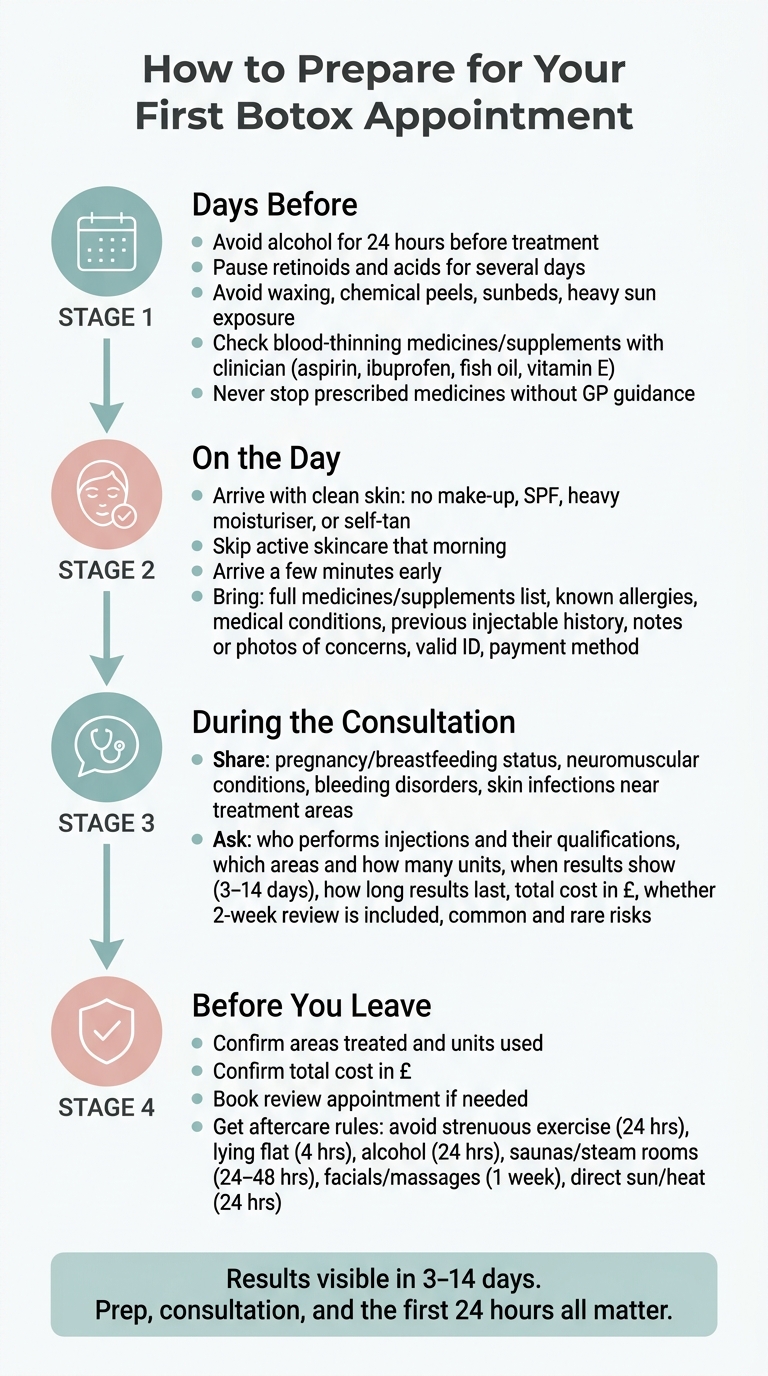
If I were getting Botox for the first time, I’d focus on three things: lower the chance of bruising, turn up with the right medical details, and leave knowing my aftercare. Most Botox results start to show in about 3 to 14 days, and many clinics suggest avoiding things like alcohol for 24 hours and strenuous exercise for 24 hours after treatment.
Here’s the short version:
- A few days before: I’d check any medicines and supplements with my clinician, avoid alcohol for 24 hours, and pause retinoids, acids, waxing, peels, and heavy sun exposure.
- On the day: I’d arrive with a clean face and no make-up, SPF, heavy moisturiser, or self-tan.
- At the consultation: I’d share my medical history, allergies, past injectables, and what I want to treat.
- Before I leave: I’d confirm the areas treated, units used, aftercare rules, review plan, and total cost in £.
What matters most is simple: Botox is not just the injections. The prep, the consultation, and the first 24 hours after treatment all matter.
| Stage | What I’d do | Why it matters |
|---|---|---|
| Before | Check medicines, pause skin irritants, avoid alcohol and sun | May help cut down bruising and skin irritation |
| On the day | Arrive clean-faced and bring notes, ID, and medical details | Helps the clinician assess me and treat me safely |
| Consultation | Ask about areas, units, risks, results, and cost | Helps me know what I’m agreeing to |
| Before leaving | Confirm aftercare, review, units, and price | Helps avoid confusion after treatment |
If I wanted extra prep before booking, I could use Eterna Face to review the areas I want to ask about, then use that to guide my questions at the appointment.
How to Prepare for Your First Botox Appointment: Step-by-Step Checklist
How to Prepare for Your First Botox Appointment – What to Do and NOT Do
sbb-itb-4219cc3
Days before your appointment: a pre-treatment checklist
The few days before your Botox appointment matter more than most people think. A few small tweaks to your routine can lower the risk of bruising and help you show up calm, prepared, and ready for treatment.
Review your medicines, supplements and alcohol intake
Some medicines and supplements can make bruising more likely around the injection site. Common examples include aspirin, ibuprofen, and supplements like fish oil or vitamin E. If you take any of these, check with your clinician to see whether you should pause them before your appointment – but only if it is safe to do so.
Never change or stop a prescribed medicine on your own. Speak to your GP, pharmacist, or prescribing clinician first.
Alcohol is worth skipping too. It can increase bruising and may leave you less hydrated before treatment. Avoid alcohol in the 24 hours before treatment.
Avoid skincare irritants, sun exposure and facial treatments
Active skincare ingredients, especially retinoids and acids, can leave your skin more sensitive. It’s usually best to pause retinoids and acids for several days before treatment, unless your clinician gives you different advice. In the meantime, keep your routine simple and gentle.
It’s not just skincare products that matter here. Try to avoid waxing, chemical peels, sunbeds, and heavy sun exposure in the days leading up to treatment. UV exposure can irritate the skin and make it more sensitive before your appointment.
Use the checklist below to see what to stop, pause, or keep using before treatment.
Comparison table: what to stop, pause or continue before Botox
| Pre-treatment item | Recommended action | Reason | When |
|---|---|---|---|
| Alcohol | Avoid | Raises bruising risk and can dehydrate you. | 24 hours before treatment |
| Blood-thinning medicines or supplements (aspirin, ibuprofen, fish oil, vitamin E) | Pause only with medical advice | Reduces the risk of bruising; never stop prescribed medicines without GP guidance. | Days before treatment |
| Active skincare (retinoids, acids) | Pause | Helps keep skin calm and less sensitive. | Several days before treatment |
| Sunbeds and heavy sun exposure | Avoid | UV exposure can irritate skin before treatment. | Days before treatment |
| Facial treatments (waxing, chemical peels, facials) | Pause | Reduces skin sensitivity and inflammation. | Days before treatment |
| Gentle skincare routine | Continue | Helps keep skin that is not irritated or sunburnt ahead of treatment. | Daily |
Once you’ve sorted these basics, the next step is simple: arrive with clean skin and have your treatment notes ready.
On the day: how to arrive ready for your appointment
On the day, come in with clean skin and the documents your clinician needs. That way, the consultation can stay focused on your goals, whether treatment is right for you, and the plan for your appointment.
Arrive with clean skin and no make-up, SPF, heavy moisturiser or self-tan
Please come to your appointment with a clean face – no make-up, SPF, heavy moisturiser or self-tan. This makes it easier to assess your face properly and helps keep the injection area hygienic.
Skip active skincare on the morning of treatment.
It also helps to arrive a few minutes early so you have time to complete your medical history and consent forms without feeling rushed.
Bring your medical details, treatment history and notes
Bring a full list of your current medicines and supplements, along with any known allergies and relevant medical conditions. You should also share any cosmetic procedures you’ve had before, including the dates and types of prior injectables.
If there are specific lines or expressions you want treated, bring notes or photos. Small details can make planning much more precise.
| What to bring | Details |
|---|---|
| Medicines and supplements | Bring a full list of current medicines and supplements, including doses |
| Known allergies | Any allergies to medicines, products or materials |
| Relevant medical conditions | Anything that could affect treatment safety |
| Previous cosmetic procedures | Types of treatment and approximate dates, including prior injectables |
| Notes or photos | Images or written notes showing the lines or expressions you want treated |
| Valid ID | For identity and age verification |
| Card or preferred payment method | Payment details for your appointment |
Once you’ve checked in, the next step is a clear discussion about your goals, the areas that concern you, and any risks.
During the consultation: what to share and what to ask
Once your pre-treatment checklist is done, use the consultation to confirm the plan. This appointment shapes your treatment plan. It’s the moment to share the health details that matter, set plain expectations, and check that the plan suits you.
Share your medical history and treatment goals clearly
Tell your practitioner if you are pregnant or breastfeeding. Botox is generally not recommended during these periods because there isn’t enough safety data. You should also mention any neuromuscular conditions, bleeding disorders, or active skin infections or rashes near the areas you want treated. Any of these can affect whether treatment can go ahead safely.
Bring your list of medicines and supplements and go through it properly, including doses. If you’ve had a reaction to botulinum toxin or other injectables before, say so. That gives your practitioner the chance to adjust the product or dosage if needed.
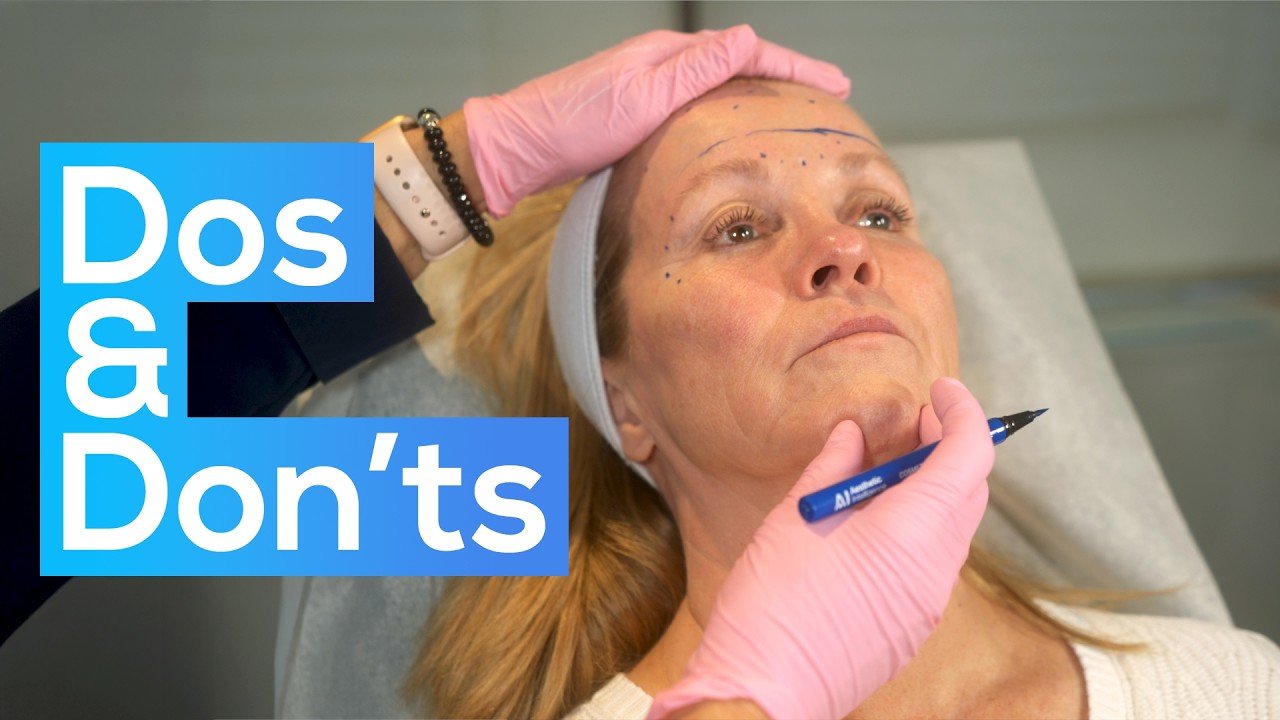
During the assessment, your practitioner may ask you to frown, smile, or lift your brows. That helps them see how your muscles move and choose the most precise injection points for a natural result.
Questions to ask about areas, units, results, risks and cost
Ask who will perform the injections and what training and experience they have.
Then get into the treatment plan itself: which areas are being advised, how many units may be used, and when you can expect to see results. Ask how long results tend to last and what may make them wear off sooner. Before you agree to anything, confirm the total cost in pounds (£), and check whether a two-week review appointment is included in the price.
Keep your questions centred on safety, dosage, results, and cost.
| Question category | What to ask |
|---|---|
| Provider | Who will perform the injections? What is their training and experience? |
| Treatment plan | Which areas are recommended? How many units may be used? |
| Results | When will I see results? How long are they likely to last? |
| Risks | What are the common side effects? What are the rare risks? |
| Cost and follow-up | What is the total cost in £? Is a two-week review included? |
| Aftercare | What should I avoid immediately after treatment? |
Use AI facial analysis to prepare better questions
Eterna Face’s AI facial analysis can help you spot your main concerns before the consultation, so you arrive with clearer, more focused questions for your practitioner. AI analysis supports, not replaces, clinical judgement. Your practitioner’s assessment of your facial movement, skin condition, and medical history will still guide the final treatment plan. That means you can use the consultation to confirm treatment and aftercare before you leave.
Final checklist: steps to take before you leave your appointment
Before you leave, confirm what was treated, how many units you received, and what aftercare you need. Also check the total cost and whether you need a review appointment. Then go over the aftercare rules you’ll need to follow once you’re out the door.
Aftercare is part of the treatment plan, not an extra. Ask what aftercare and lifestyle advice applies to you.
Use this final check so you leave with a clear plan for the next 24 hours. Before you go, ask which restrictions apply in your case.
Comparison table: aftercare restrictions to ask about before you leave
Confirm these restrictions with your practitioner before leaving, as advice can vary from person to person.
| Activity | Avoid for | Reason why |
|---|---|---|
| Strenuous exercise | 24 hours | Reduces bruising and early swelling. |
| Lying flat | 4 hours | Helps limit movement immediately after treatment. |
| Alcohol | 24 hours | Can increase bruising. |
| Saunas and steam rooms | 24–48 hours | Heat can worsen swelling. |
| Facials and massages | 1 week | Avoids pressure on treated areas. |
| Direct sun or heat exposure | 24 hours | Helps limit irritation and swelling. |
Clear aftercare instructions help cut down avoidable problems.
FAQs
What if I bruise easily?
If you bruise easily, say so during your consultation. That gives your practitioner a clearer picture and helps them tailor their advice to you. It’s also standard practice to tell your clinician if you take any blood-thinning medicines.
When you share your full medical history, they can keep your treatment plan as safe as possible and set clear expectations about minor side effects.
Can I drive home after Botox?
Yes, in most cases you can drive home after a Botox appointment.
Botox is a non-surgical treatment and it doesn’t involve general anaesthetic or heavy sedation. That means most people can get back to normal day-to-day activities, including driving, straight after their appointment.
That said, only drive if you feel well and comfortable doing so. It’s also best to follow the aftercare advice your practitioner gives you, as they’ll base it on your treatment and medical history.
What if I do not like the result?
If you’re concerned about your results, the most important step is to keep communication open with your practitioner from the first consultation. They should talk you through your aesthetic goals, the results you can expect, and any risks, so you go in with a clear and realistic picture.
Results can vary from person to person, which is why a personal assessment matters. If anything worries you after treatment, speak to your clinician about follow-up care and whether any adjustments may be needed.